MANE 6313
Week 9, Module G
Student Learning Outcome
- Select an appropriate experimental design with one or more factors,
- Select an appropriate model with one or more factors,
- Evaluate statistical analyses of experimental designs,
- Assess the model adequacy of any experimental design, and
- Interpret model results.
Module Learning Outcome
Describe fold-over designs.
Resources for the Week 9, Module G micro-lecture are:
Sequential Experimentation
-
This is particularly applicable for resolution III experiments
-
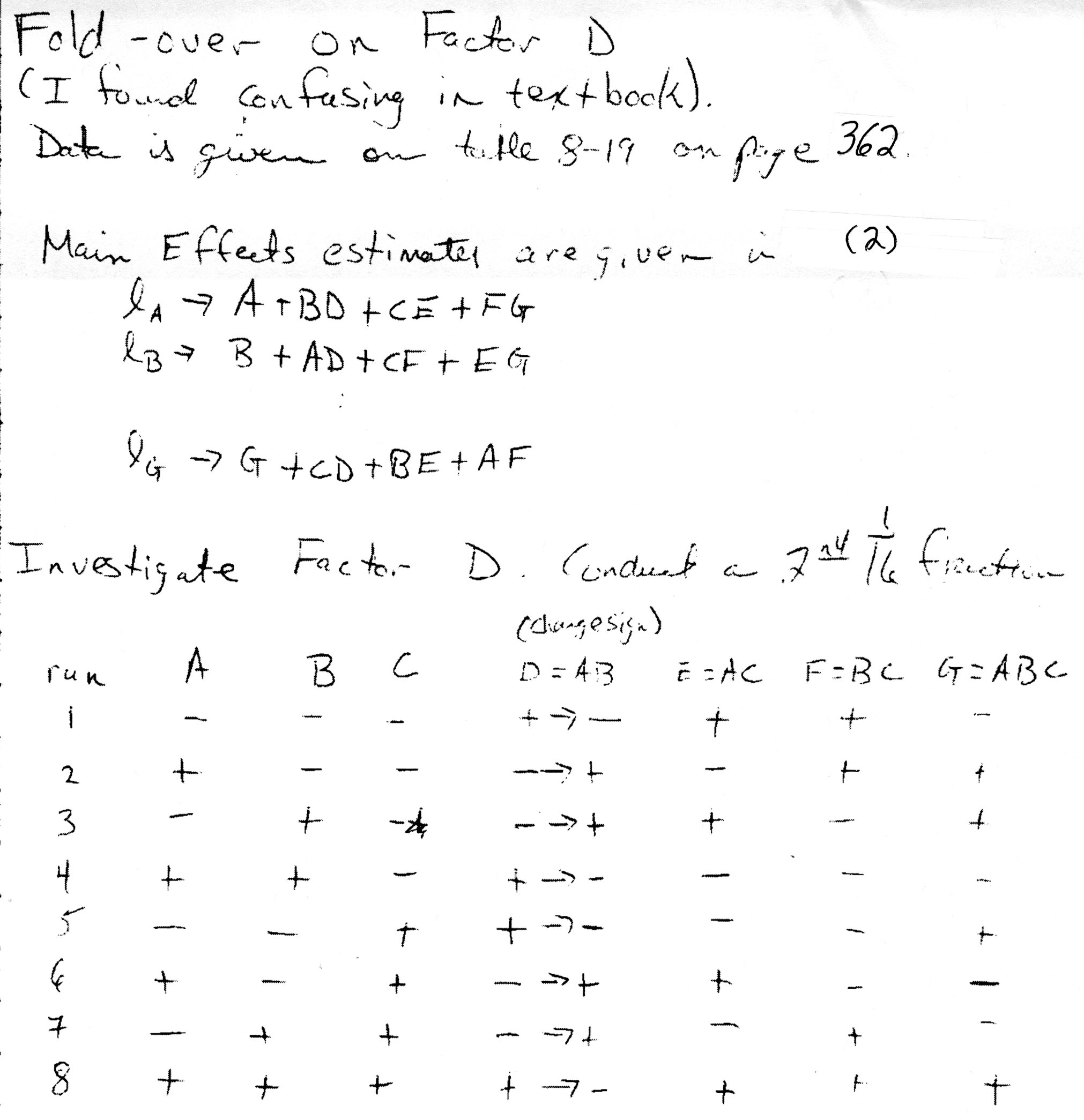
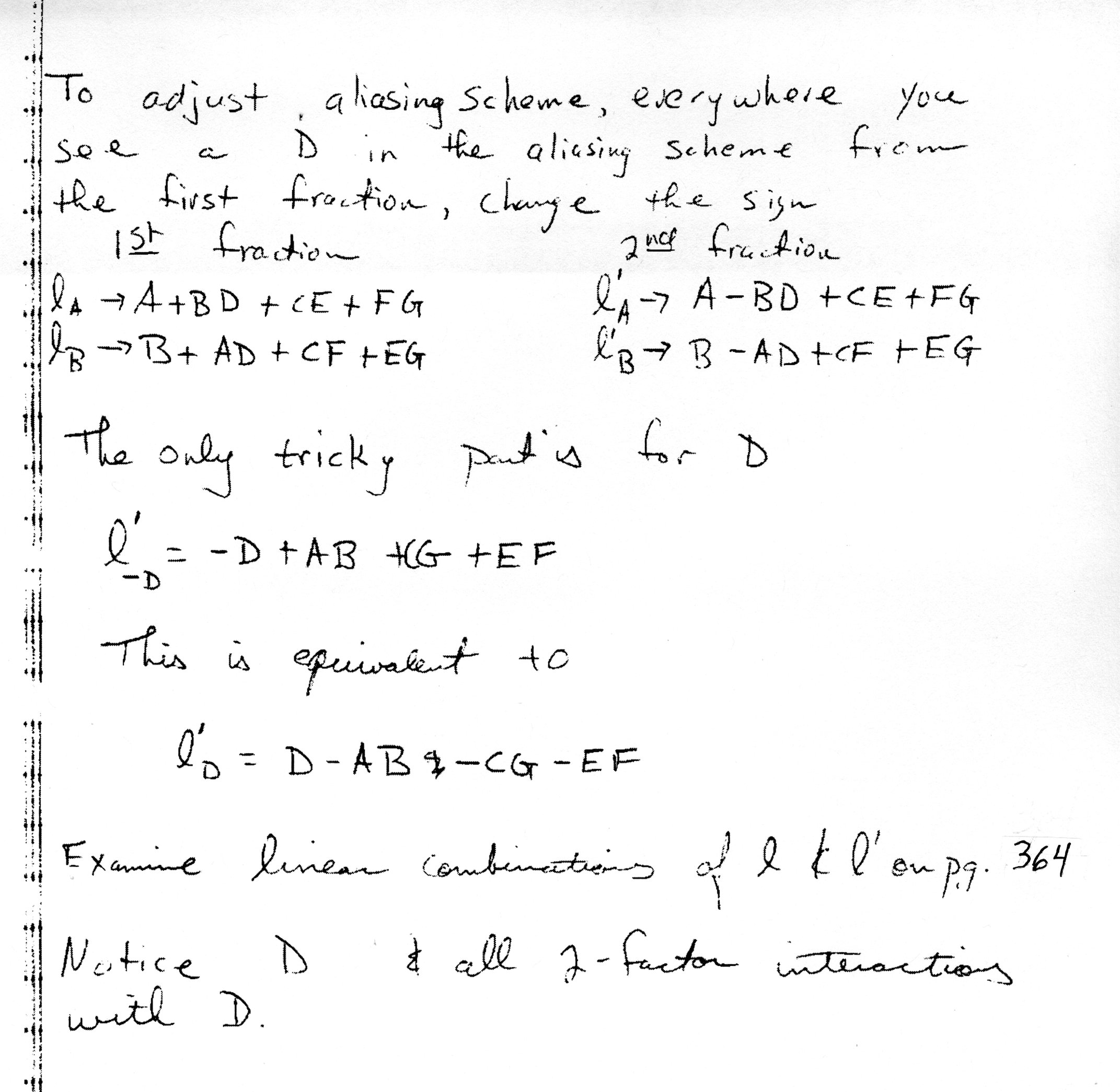
To separate an interesting effect, e.g. C, go to the appropriate column and change the signs. This is one type of fold-over
-
In general, the main effect C will not be aliased with any other two-factor interactions
- In general, all two-factor interactions involving C will not be aliased with other two-factor interactions
-
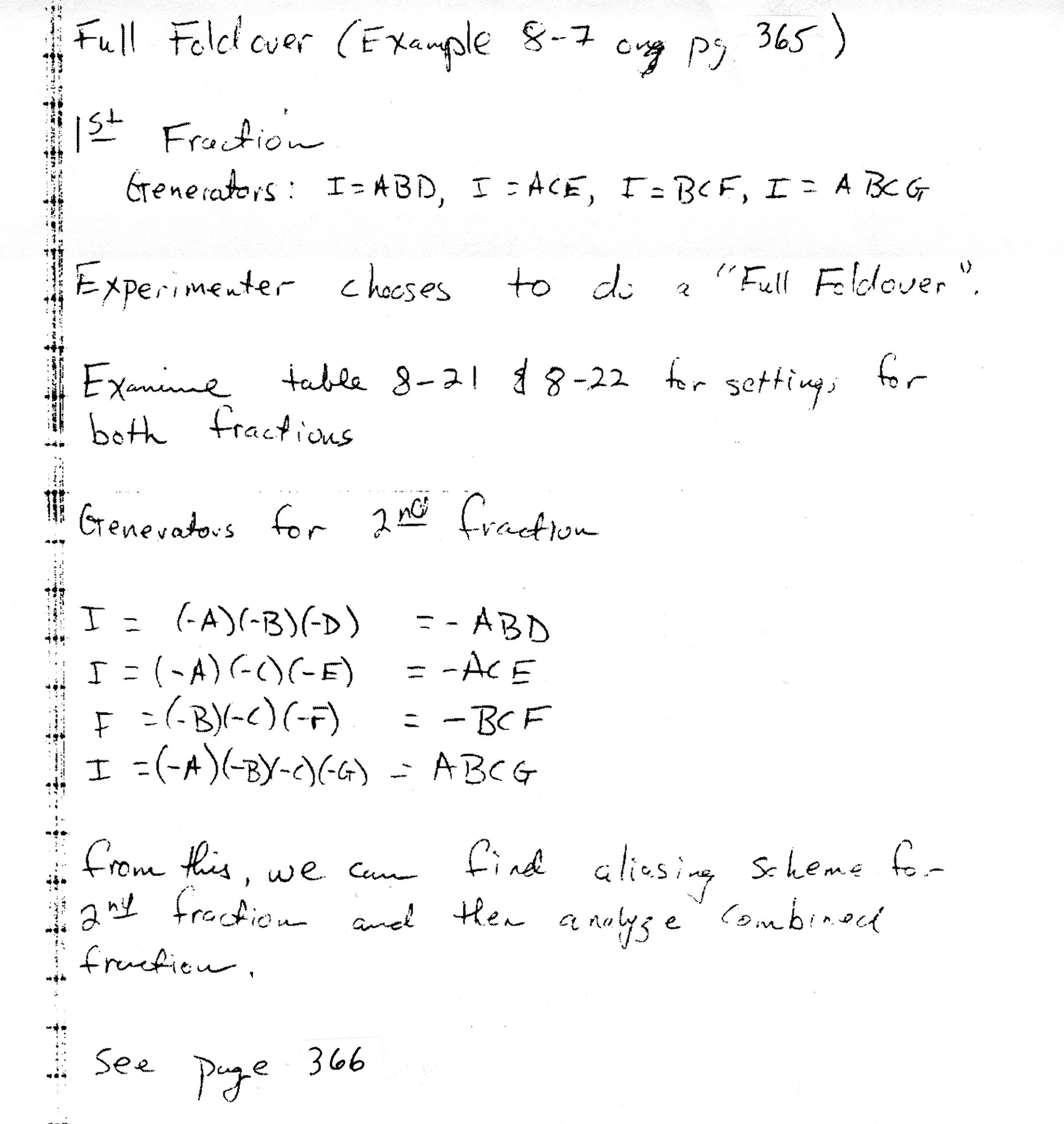
A full fold-over occurs when you change all the signs in the design matrix.
-
This will break the alias links between the main effects and two factor interactions
- Two-factor interactions may be aliased with each other
Defining Relations for the Fold-over
-
Examine all of the defining relations (including G.I.'s). If the word length is odd, change the sign for the fold-over, otherwise leave sign alone
-
Montgomery shows a method to determine the defining relations for the (combined) fold-over experiment
Plackett-Burman Designs
-
These designs are two-level fractional factorial designs for studying \(k=N-1\) variables in \(N\) runs where \(N\) is a multiple of 4.
-
If \(N\) is a power of 2, Plackett-Burman designs are equivalent to resolution III experiments
-
For \(N=12,20,24,28,36\) these designs may be of interest. This set of Plackett-Burman designs is said to be a nongeometric design
-
The nongeometric designs have very messy alias structures and may not project well.